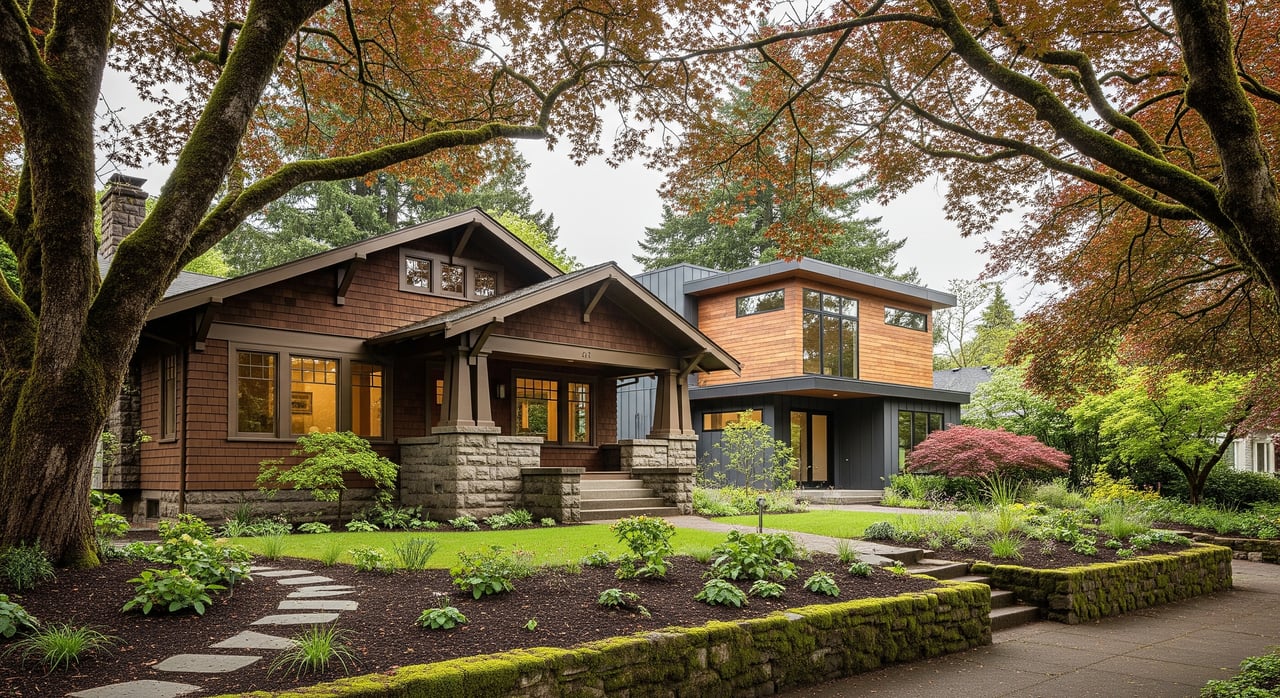
Trying to pick between a charming Craftsman bungalow and a shiny new build in Eugene? You are not alone. With everything from early 1900s gems near the University to modern homes in growing subdivisions, the choices can feel overwhelming. This guide breaks down the most common local home styles, where you tend to find them, what to watch for during inspections, and how to target your search so you land a home that fits your lifestyle. Let’s dive in.
Eugene housing mix at a glance
Eugene’s housing grew in waves. You see older single-family homes near downtown and the University of Oregon, large mid-century tracts in inner-ring neighborhoods, townhome and condo infill closer to activity centers, and newer subdivisions near the city’s edges. These patterns create clear style clusters you can use to focus your search.
In broad terms, you will find Craftsman bungalows and other early 1900s homes in areas close to downtown and the University, including parts of the Whiteaker, Friendly and Jefferson areas, and pockets along the Cal Young corridor. Mid-century ranches and split-levels show up widely in inner-ring neighborhoods and larger suburban tracts, including portions of Friendly and Santa Clara. Townhomes and condos cluster near the University, downtown, and along transit corridors. New builds are more common on the southern and western edges of the city and on infill lots. Always verify specifics for each property with MLS data and the Lane County Assessor.
Craftsman bungalows
Typical layout and features
Early 20th-century homes, often built between 1900 and 1930, are usually 1 to 1.5 stories with compact footprints and more defined rooms. You will often see front porches with tapered columns, built-ins, fir or hardwood floors, and plaster walls. Lots can be modest, and streets tend to be tree lined and walkable.
Key inspection priorities
Focus on electrical and plumbing age, foundation condition and moisture in crawlspaces, and roof condition. Older finishes can include lead paint or asbestos, so plan for testing as needed. Energy upgrades like insulation and storm windows are common retrofit projects.
Where they cluster
You tend to find these homes near downtown and the University, including parts of the Whiteaker and Friendly/Jefferson areas, plus older streetcar-era blocks nearby. Expect tradeoffs like smaller lots and limited garages in exchange for walkability.
Best fit
You may love this style if you value character details and a near-amenity location. It is less ideal if you want an open-plan layout, large garage space, or a project-free experience.
Mid-century ranches and split-levels
Typical layout and features
Built mainly from the mid 1940s through the 1970s, ranches are popular for single-level living. Many have more open living areas than earlier styles, attached garages, and larger lots in suburban tracts. Some are split level and may have slab or crawlspace foundations.
Key inspection priorities
Check the roof and siding, window efficiency, drainage around slabs or crawlspaces, and HVAC age and type. In older examples, ask about possible asbestos in older floor tiles or insulation. Some lots may support an ADU depending on zoning.
Where they cluster
Look in inner-ring suburbs and established neighborhoods east and north of downtown, including portions of Friendly and Santa Clara and other mid-century subdivisions.
Best fit
This style works well if you want single-level living, a bit more interior space, and larger yards. It offers a middle ground between older character and more modern layouts.
Townhomes and condos
Typical layout and features
Attached homes range from compact 1-bedroom condos to multi-level townhomes with 2–3 bedrooms. Many have smaller private yards or common green spaces. Expect an HOA or condo association, shared walls, and assigned or limited parking.
Key inspection priorities
Review HOA documents, reserve studies, and recent assessments. Ask about exterior maintenance responsibilities and insurance coverage. In older complexes, pay close attention to cladding, roofing, and any signs of moisture intrusion, which can be a concern in the Pacific Northwest.
Where they cluster
Townhomes and condos are common near the University, downtown, and along mixed-use or transit corridors. These locations trade private yard size for proximity to amenities.
Best fit
You may prefer this option if you prioritize location and a low-maintenance lifestyle. It can also be a cost-effective entry point compared with many detached homes.
New builds and recent subdivisions
Typical layout and features
Newer homes, often built from the 2000s to today, tend to feature open kitchens and living areas, modern primary suites, and attached garages. They are built to current codes with better insulation, energy-efficient windows, and modern mechanicals like heat pumps.
Key inspection priorities
New homes typically have lower near-term maintenance needs. Still, confirm grading and drainage, check finishes, and review builder warranties and any HOA rules or CC&Rs. Verify energy system specs and ensure any promised features are in place.
Where they cluster
You will often find recent construction on the city’s southern and western edges, in planned subdivisions, and on infill lots throughout established areas.
Best fit
Choose this if you want turnkey convenience, energy performance, and modern layouts. It may feel less appealing if you prefer historic character or large, established trees and yards.
Focus your search like a pro
Use targeted filters to save time and find the right match:
- Year built
- Pre-1930 for Craftsman and early homes.
- 1945–1975 for mid-century ranches.
- 1990+ or “new construction” tags for newer homes.
- Property type
- Single-family detached for bungalows and ranches.
- Condo or townhouse for attached homes.
- Layout and lot
- Filter by single-level vs multi-story, garage needs, and lot size.
- Location proxies
- Higher walk scores for downtown and University-adjacent searches.
- Wider lots and garage space typically in inner-ring or suburban tracts.
- Community and commute
- Map commute times and check school boundaries if they matter to you.
- HOA presence
- Use HOA filters for condos, townhomes, and some new subdivisions.
Before you write an offer, verify year built, lot size, and property details with the Lane County Assessor, then tailor inspections to the home’s era.
Market rules that shape options
Middle housing and infill
Oregon’s shift toward “middle housing” is expanding where duplexes, triplexes, fourplexes, and townhouses can be built. Oregon’s HB 2001 middle housing law requires many cities to allow more housing types in traditional single-family zones. Eugene’s local implementation supports more townhomes and infill over time.
ADUs and expansion
Recent state and local changes have generally made ADUs easier to permit in many Oregon cities. Older lots with more space may offer ADU or expansion potential, subject to zoning and site conditions.
Historic districts and permits
If a property sits in a designated historic district or appears on a historic resources list, exterior changes may require special review. Factor timelines and costs into your plan if you want to renovate.
Energy and retrofit incentives
Energy upgrades such as insulation and heat pumps can improve comfort and lower bills. Local programs and utility incentives in Eugene may help offset costs. Ask about current offerings during due diligence.
Climate and insurance checks
Eugene’s rain means roof, siding, and flashing details matter. For homes near the Willamette River and tributaries, review flood or hazard maps during due diligence.
Quick style checklists
Craftsman and early homes
- Electrical type and capacity, plumbing materials, and panel age.
- Foundation and crawlspace moisture, roof and flashing condition.
- Lead and asbestos testing, condition of original windows and floors.
Mid-century ranches
- Roof and siding age, window efficiency, and drainage at slab or crawlspace.
- HVAC type and age, possible asbestos in older finishes.
- Garage structure and any unpermitted conversions.
Townhomes and condos
- HOA rules, reserves, and recent special assessments.
- Exterior envelope condition and maintenance history.
- Roof, siding, common areas, parking, and pest reports.
New builds
- Grading and drainage, builder punch list, and warranty documents.
- Energy system specs and promised features installed.
- Neighborhood infrastructure such as sidewalks and street trees.
Next steps
Your best fit comes from matching your lifestyle to the right era, layout, and location. Start with must-haves, narrow by year built and property type, and tailor inspections to the construction era. When you are ready to compare neighborhoods, line up tours, or stress-test renovation budgets, reach out to a local team that understands Eugene’s micro-markets and building quirks. Connect with Chuck Wetherald, PC for hands-on guidance and a clear plan from search to closing.
FAQs
What are common maintenance priorities for Craftsman bungalows in Eugene?
- Expect to evaluate electrical and plumbing age, foundation and crawlspace moisture, and roof and flashing, plus consider lead or asbestos testing and energy upgrades like insulation and storm windows.
Are mid-century ranches a good long-term choice in Eugene?
- Many buyers value single-level living, larger lots, and flexible layouts, and some lots may allow ADUs depending on zoning, which can support long-term usability and resale appeal.
What should I review before buying a condo or townhome in Eugene?
- Read HOA bylaws and rules, review reserve studies and recent assessments, confirm maintenance responsibilities and insurance coverage, and have the exterior envelope evaluated for moisture risks.
Where can I find older, walkable homes near downtown Eugene?
- Search neighborhoods closest to downtown and the University and filter for pre-1930 homes; you may see options in parts of Whiteaker and Friendly/Jefferson, though specifics vary block by block.
How does Oregon’s middle housing law affect new townhomes in Eugene?
- HB 2001 opened the door for more duplexes, triplexes, fourplexes, and townhouses in areas that once allowed only single-family homes, increasing future infill opportunities.
How can I check if a property is in a historic district in Eugene?
- Contact the City of Eugene’s Historic Resources program or consult city historic resource maps during due diligence, since designated properties may have renovation rules.